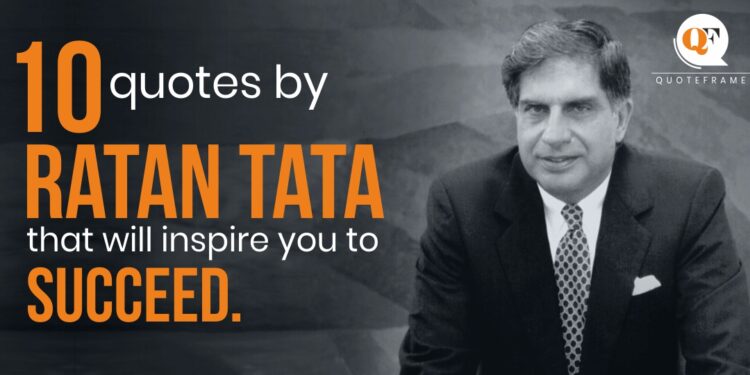
10 quotes by Ratan Tata that will inspire you to succeed
Pithy quotes come to those singed by life who nevertheless take such pains as part of growing up. In his case, it happened early in life when his parents separated and he was brought up by his grandmother who taught him to retain dignity at all costs, a value Ratan Tata says is still with him even today- not surprising in the way his team handled the pains of all those who went through the horrors of the 26/11 carnage, this when most of them weren’t directly related to the Tata Group.
An alumnus of the Cornell University, his first job was managing operations on the Tata Steel shop floor as far back as 1961. With his becoming the Group’s Chairman in 1997, they certainly developed wings in the way they have scaled new heights! Besides a revenue jump of 4000% and profit jump of 5000%, they have accomplished some of India’s biggest mergers and acquisitions including the addition of JLR, Tetley Tea and Corus Steel.
Some of India’s most talked-about projects like the Tata Nano car, the world’s cheapest car at INR 1 lac, were his baby. Insight Success
The best business magazine for businesses that offers Online business news updates and flash aspiring Entrepreneurs of Journal corporate world, Leaders & Business Executives. Via Online Media & Print Magazine, it offers the way of a business solution.
The love for food is in their bloodline. So, when Arindra Saha came back to his hometown in Kolkata after completing his degree in business management, it was but natural for him to try his hand at satiating the gastronomic delights of the foodloving Kolkata. He started Sobar Café which in Bengali means Everyone’s Café and true to its name, the café serves platter that is appealing to everyone as per their choice of food. We got the opportunity to steal some time with the restaurateur to learn about his venture into the food business and what makes his food joints a hit among the food connoisseurs.
Bellow are the highlights of the Interview with Arindra Saha and Insights Success a top business magazines
Please tell us about yourself
I am a true-blue Bengali who grew up in Kolkata and lived most of my life here, barring the brief relocation to Mumbai where I had gone to pursue my MBA from Whistling Woods International. I did my schooling from a premier institute in Kolkata – St. James School, post which I graduated with a degree in Commerce from Bhawanipore College, Kolkata. Whistling Woods International happened right after that and I learnt that doing what you “love” is probably the single most important thing in life.
How did you venture into the restaurant business?
Going back a little, my paternal grandfather owned a restaurant in Bangladesh (my father migrated to India in 1971). I believe it had always been in my blood – I had always harboured dreams of being the restaurateur. Why? Because I love to eat, I love to feed, and I love cooking. My favourite pastime is watching cooking shows and learning about cuisines from all around the world. Not fibbing, no. When I came back to my hometown after my MBA, the only thing that I could think of doing was giving shape to my dream, and so I did, without any delay. I did not face as many hurdles as others would do, for which I have only my parents to thank.
Please elaborate about your restaurants and the cuisine offered.
Today, I am the owner of three restaurants in my city – Café Aamar Kolkata, Tandoor Box, and C for Chinese. My first baby – Café Aamar Kolkata (translation: My Kolkata) is a tribute to my hometown, cherishing the love I have for Bengali cuisine. It gives me immense joy to say that it would turn three this April. I succeeded in making my dream come true. Tandoor Box, my second baby, is comparatively new. Its journey started only in 2019. The cuisine it serves is self-explanatory. C for Chinese is a dark kitchen, and it operates from Café Aamar Kolkata itself.
What is your mantra for success?
Three years in this industry (forever to go, of course!), and I have learnt that following WWI’s mantra of doing what you love was the best thing I did.
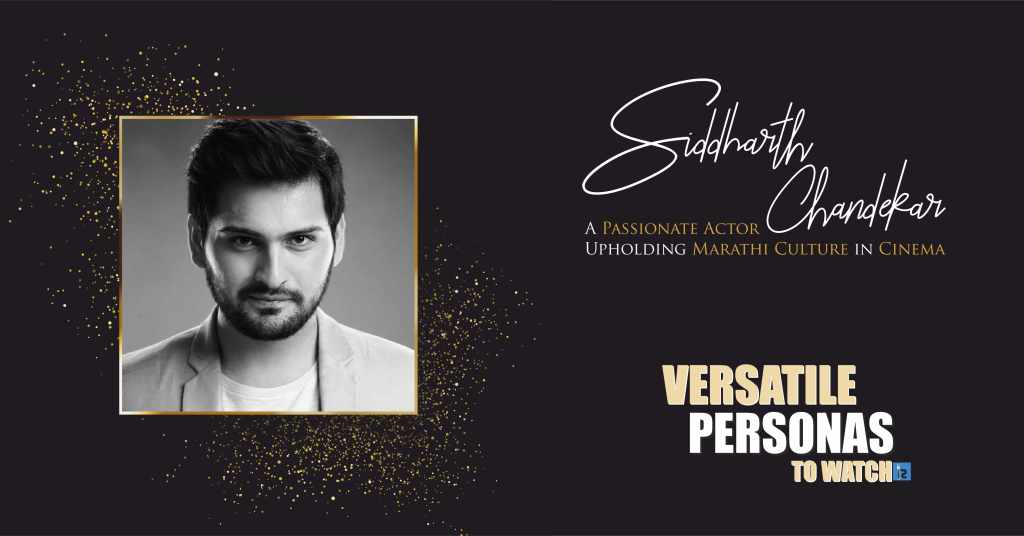
Siddharth Chandekar | Actor | Marathi film industry
Versatile personalities are creative and have a knack to achieve their goals by overcoming difficult situations. They never give up at the face of adversity and take up every challenge as an opportunity to learn and grow. These people are a source of inspiration for others because they leave no stone unturned to transform their dreams into reality.
One such dynamic personality with the zeal to make an impact in Indian cinema is Siddharth Chandekar. He is a renowned figure and an excellent actor of the Marathi film industry. In this issue of Insights Success a business solutions magazine, lets join Siddharth on his inspiring journey towards excellence.
The Beginning of the Voyage
Initially, Siddharth did not have the aspirations of becoming an actor. Although he did some acting gigs in his childhood, he was always passionate about becoming a chef. After completing his 12th standard, Siddharth wanted to join a catering college. However, life took a turn, and he got an opportunity in his first television serial, ‘Agnihotra’. After working in the show, he realized the vastness and beauty of acting and decided to choose it as a mainline career.
Challenges along the Way
Siddharth states that he did not face major hardships throughout his career. He was fortunate enough to work with legendary actors such as Sharad Ponkshe, Mohan Joshi, Vinay Apte, and many more in the very first chance. However, for Siddharth, the greatest challenge was to live up to the expectations of his mother and the great actors he had worked with.
Opinions about Marathi Theatre Culture
Siddharth believes that Marathi theatre has always been the most important part in Marathi entertainment industry. He opines that even the most talented actors of Bollywood also have experience in theatre, and almost every Marathi actor has done theatre. Siddharth is of the opinion that theatre is the first school for aspirants who want to pursue the career of acting.
Upcoming Projects
Speaking about his future projects, Siddharth states that he is doing a Marathi television series known as ‘Saang tu ahes ka’. Apart from that, he is also a part of an upcoming film called ‘Jhimma’. It is a travel film about a women’s only tour to London. Siddharth is further associated with a forthcoming romantic web series on MX Player.
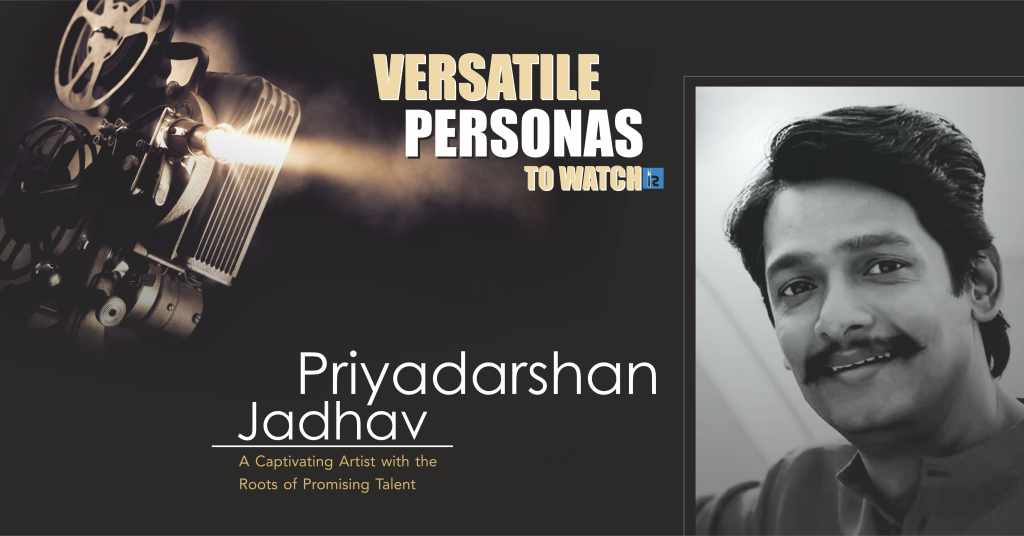
Priyadarshan Jadhav | Actor, Director & Screenwriter | Marathi film industry
Marathi theatre has always been accounted for its most culturally rich theatre traditions in the country. Marathi theatre had been exclusively represented by the folk forms for ages and since then it has unfolded and evolved into various successful movies with interesting stories and scripts. The first movie that was ever made in India was in Marathi – Raja Harishchandra which was made by Dadashaheb Phalke in 1913.
Priyadarshan Jadhav – Actor, Director, and Screenwriter is an acclaimed personality in the Marathi film industry. Inclined at an early age into acting, he stepped into D. G. Ruparel College to become a proficient artist. Well-known for his roles in Timepass 2 as Dagadu, along with screenplay writer for Timepass, Priyadarshan received huge applause from the audience and the Marathi industry.
Here are the highlights from the interview where Priyadarshan and Insights Success a business magazines india has taken us through the journey towards becoming a skilled performer.
Brief us about your professional journey in the Marathi Entertainment industry
I came to Mumbai in 1997 and joined D. G. Ruparel College to gain expertise in theatrical performance. It’s the college where I initially received admiration on my talent that I have the caliber to act and the potential to work in showbiz. Primarily I was doing lights, background music, and sets; and therefore getting praised for my work in college plays was like an achievement for a small-town boy who stepped his foot in the terrene of entertainment.
Throughout your professional journey, what kind of challenges have you faced?
Being an actor, writer, and director, I have gone through a lot of challenges and my biggest hardship was to crack the first movie that I have directed with a minimal budget. With changing lifestyles and technology, it’s challenging to make the audience stay with the stories and characters.
What do you think about making thrilling Horror Movies in Marathi?
Our culture is more curved towards plays and theatre as compared to movies and despite being a profitable genre, horror movies are among the highest-risk group with a budget that is expensive to work with. The elements and effects required in making a horror movie are sky-high which makes it unsustainable to craft a movie within a desired budget.
From her first released Marathi blockbuster Ashi Hi Banwa Banwi to the latest sports drama Chal Dhar Pakad, Priya Berde has portrayed versatile roles on-screen. Her bold presence is what gives an edge to every character she has played.
The following interview with Priya Berde and Insights Success a business solutions magazine gives you a sneak peek of her behind-the-screen persona. Keep on reading to know about her journey in Marathi cinema, her views on how women can manage work-life balance, and about the biopic of legendary actor Laxmikant Berde.
What was your inspiration behind becoming an actor?
I entered the industry as a dubbing artist at the age of eight. I was fortunate to be nourished and nurtured as an artist in the presence of industry veterans at an early age. My father Arun Karnataki was a director, and my mother Lata Arun was a legendary theatre artist. Coming from a family of legends such as Bhalji Pendharkar and V. Shantaram was a blessing and a huge responsibility at the same time. And the audience and my fans have played a huge part in me maintain that family legacy and continue to live my passion for the cinema for over 40 years.
With the hectic schedule of shooting how have you been maintaining the work-life balance?
After I got married and had kids I chose to stay back at home. But after my husband and actor Laxmikant Berde’s unfortunate demise I decided to return to work. At that time Director Kedar Shinde was making a film Jatra and he asked me if I was interested in playing a role in it, and I said yes. That’s how I returned to Marathi cinema and started the second innings of my career.
Please share your future projects with us. Where would your fans get to see you next?
I am at a stage in my career when I would rather choose a role that is in my comfort zone. And the character I am playing in my next play was something I have aspired to do in theatre for a long.
What advice would you give to the aspiring Marathi actors?
Due to the reality shows and social media, young aspirants are getting early recognition and opportunities to show their talent. But it’s the experience and technique along with talent that nurtures the artist within. So, I would advise aspiring actors to get as much experience as they can before they leap to enter the film industry. Try taking part in college-level competitions, ad films, or any other mediums where you get experience and learn techniques.
Sanskruti Balgude | Actress | Marathi & Indian film industry
Some individuals are driven to achieve greatness. They are dedicated towards their craft and leave no stone unturned to improve themselves and make a mark in the industry and the society. They are goal driven and believe in inspiring others to attain their dreams.
These personalities believe in themselves and have a positive perspective towards things. One such pragmatic personality who has made a major impact in the Marathi and Indian film industry is none other than Sanskruti Balgude. She is a renowned actress, who has inspired the audience through her impressive performances. Ms. Sanskruti started her acting journey with the serial, Pinjara. Since her debut, she has not looked back and aims to attain numerous landmarks as an actress.
“I believe that the actresses are nurturing themselves and delivering strong performances”
The bellow are the highlights of the interview with Insights Success a Business Magazine.
Experience of Acting in Films
Ms. Sanskruti states that her initial experience of acting in films was intimidating. She feels that daily soap acting is entirely different from acting in films. She has always been a fan of the subtle form of acting and has tried to incorporate it whenever she performed.
Opinions about the Film Industry
Ms. Sanskruti believes that the film industry has made a massive impact. The Hindi film industry is delivering great content. She states, “These days, Hindi films are focusing on women empowerment and this change is commendable”. She believes that Vidya Balan did an excellent job in upholding the concept of women empowerment in various films, and the legacy is being carried forward by many other actresses.
Advice for the Budding Generation
Ms. Sanskruti states, “People think becoming an actor or an actress is the easiest job, but it is not”. She advises the emerging artists to work hard and master their craft. One cannot become an actor or an efficient artist overnight. It requires patience, dedication, and hard work.
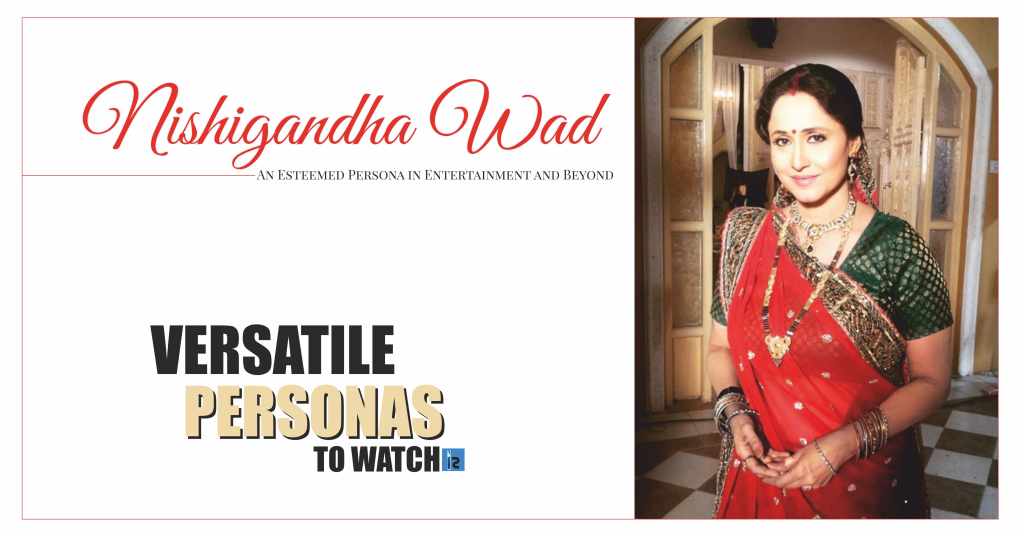
Nishigandha Wad | Actress | Marathi films and TV industry
Nishigandha Wad, a renowned name in Marathi films and TV industry. Some might remember her from Marathi films Shejari Shejari and Gruhpravesh, some might recognize her from Bollywood films Wazir and Race 3, while the TV audience knows her from the popular Hindi TV shows Sasural Simar Ka and Chehra. But her work has gone far and beyond the entertainment industry. She is not only known for gracing the screen with her powerful performances, but also for supporting the social causes with equal zeal.
“While sharing your happiness with the world, you should keep something for yourself as well”
The bellow are the highlights of the Interview with the Insights Success a business journal Read on further to get a sneak-peek at Nishigandha Wad’s behind-the-screen story.
From facing challenges to making mark
“I want to do something splendid before I go into my castle, something heroic or wonderful that won’t be forgotten after I’m dead. I don’t know what, but I’m on the watch for it, and mean to astonish you all someday.” Just like Jo March from Little Women, Nishigandha Wad as well has astonished the generations with her eminent persona on-screen.
But this success hasn’t come easily to her. “Training at an acting school under the legendary Satyadev Dubey, Arvind Deshpande, Sulabha Deshpande, and Jaydev Hattangadi was another thing.” Nishigandha said, “But when I first set foot alongside veterans in professional Marathi theatre it took me a long time to see myself from my soul sight. Like any other freshman, I was grasped with worries about what others and the audience will think about me.” “But ease comes with experience.” She advised.
Not only in the acting school or while working in theatre or films, but a true artist is nurtured outside as well. The stories they read, hear, and live have a huge impact on how the actor is shaped, how strong their roots become. Talking about which, Nishigandha shared fond memories of her childhood, “I grew up listening to the stories of legends like Geeta Bali and Meena Kumari from Kidar Sharma who was my uncle’s neighbor.”
Stepping into the world where your parents have already created milestones brings both opportunities as well as challenges. Not everyone can stand up to those challenges or make their mark. But Abhinay Berde, among the rising stars of the Marathi film industry, has left his mark with his first Marathi film and he plans to keep doing so with every kind of role he will be portraying whether it is the main lead, a romantic hero, or a villain. Abhinay firmly believes in versatility and creating films that are entertaining with the characters and the situations that truly resonate with the audience.
For our latest edition of Insights Success a business solutions magazine, we got Abhinay Berde candid about his journey as an actor, how he entered the Marathi film, and his goals for himself as well as to be instrumental in reviving the golden era of the Marathi film industry. Read on to know more about Abhinay Berde and his exciting journey so far and to be continued.
As a rising star of the Marathi films, how do you think the perspective of the audience has changed over the years towards Marathi films?
I feel that somehow Marathi audience has moved away from Marathi cinema. Sure, people are more supportive through other platforms such as sharing and commenting on videos on social media or showing their support and appreciation by watching reality shows where we promote our films.
But in the end, something stands in between Marathi films and their audience, which is why the audience is not coming to the theatres. I think the entire industry should collectively search for the reasons. People spend their money to watch films in theatre and they deserve the kind of entertainment they ask for. And as a part of this industry, it’s our job to deliver that kind of entertainment to make the audience happy.
Another factor why the audience loved certain Marathi films like Sairat, Duniyadari, Timepass, and Ti Sadhya Kay Karte was the entertainment factor and the relatability. People could relate to the characters or the situations that were portrayed in these and more such films. These films depicted the reality or a part of it that resonated the real-life society. That’s why these films did well in terms of business as well as popularity even after.
The Marathi film industry has so much talent that it could put us on the map. We need to explore what is working for us. We need to motivate that talent to come forth and shine through. The entire Marathi industry has so much love and acceptance within. I feel gratitude for working here. I want to do something for the audience and the Marathi film industry through my work as an actor.
“I want to carve my own path. I want to create my own legacy. And I want to honour my parents with my legacy”
He had a well-planned life ahead of him during his formative years and being equipped with a prestigious professional degree of those times, it was as though he could visualise his life. But destiny had other plans for actor Milind Gunaji – a path that he never thought of in his wildest of wild dreams. A believer in destiny and Karma, he went where the flow took him. Life could not have been any better for him. Perhaps what he desired was not what he did the best. Hence came the strings of failures in what he had planned but unfathomable success in whatever came his way by chance.
The bellow are the highlights of the interview with Milind Gunaji andInsights Success a top business magazines
Indeed, his was the Midas Touch kind of a story. Whatever he set his foot on by chance, he was successful. A multitalented persona, his claim to fame is – Just give your best to whatever you do. A successful model (and longest serving at that), a great actor, a trekker and nature lover, a writer, a poet, a singer and a spiritual seeker, the larger-than-life persona Milind Gunaji still has a lot in his kitty.
We take through his journey that has been lesser known until now. An engineer by qualification, his sports career was well-planned, and he wanted to be a business tycoon, but destiny had carved a different path for him.
Spiritual Journey
The actor is deeply into meditation and can share lot of knowledge on spirituality. It all percolates down from his ancestors. “My ancestors wrote Gita Rahasya. The first biography of Saibaba was written by my great, great, great grandfather which is the property of Sai Sansthan now. I was fascinated by Gajanan Maharaj. I am into meditation. Once in a year, I visit Shirdi. I am an explorer. Now, I am also getting into astrology. I was with late Bhaiyyu Maharaj for some time. I was trying to learn as much as possible. I wrote a book on basic meditation. I learnt Maharshi Mahesh Yogi’s transcendental meditation (TM). Becoming thoughtless and TM are different, but the goal is the same. Some focus on breath and stop the thoughts. I can go into this stage,” he shared. In the future, he would like to come out of this material world and do something good for nature, wildlife, and tourism.
“Jack of all trades or master of one,” this classic statement is most relevant in today’s world of business whether it’s corporate companies or showbiz. Some might argue that expertise or being ‘master of one’ is rather essential and no doubt it is. However, in today’s business settings what thrives and attracts the limelight is versatility.
The zest to keep learning, openness to take on challenges on diverse platforms, and flexibility to adapt to the changes are the key to survive amidst daunting stress and fear of failure. Versatility is often connected with artists and the need and zeal of inculcating and performing diverse roles on different platforms.
Mastering the art of versatility
#1 Cross-platform performance
Employers often introduce cross-training platforms to ensure employees have adequate knowledge about other operations and skillsets. So, when the need comes employees can fill in another’s place or give a helping hand to ensure smoother operations on the floor.
Step out of your job role when needed and take the initiative to do jobs outside your normal roles. This will help you develop and depict versatility at work.
#2 Going beyond the comfort zone
No matter in which field you work there comes a time when some challenges at the workplace encourage you to leave your comfort zone. In today’s fast-paced environment, the need to adopt new technology, techniques, and training to survive the stress and thrive in the competition becomes necessary and thus extending your comfort zone becomes essential.
#3 Adapting the change
“Change is the only constant,” Greek philosopher Heraclitus had said. Whether it’s to survive in the world or thrive in a career one has to be flexible in approach and adaptable towards change in time, technology, or turn to play a different role in your career.
In the latest edition of Insights Success “Versatile Personas to Watch” you will get to read about such personalities who with their passion, dedication, and versatility have turned their stories of struggles to write success sagas inspiring thousands of others to believe in their passion and do what it takes to achieve their dreams.







 Insights Success